Why Digital Marketing Should Start Before Your Website or App Launch
By Matija Gjopar
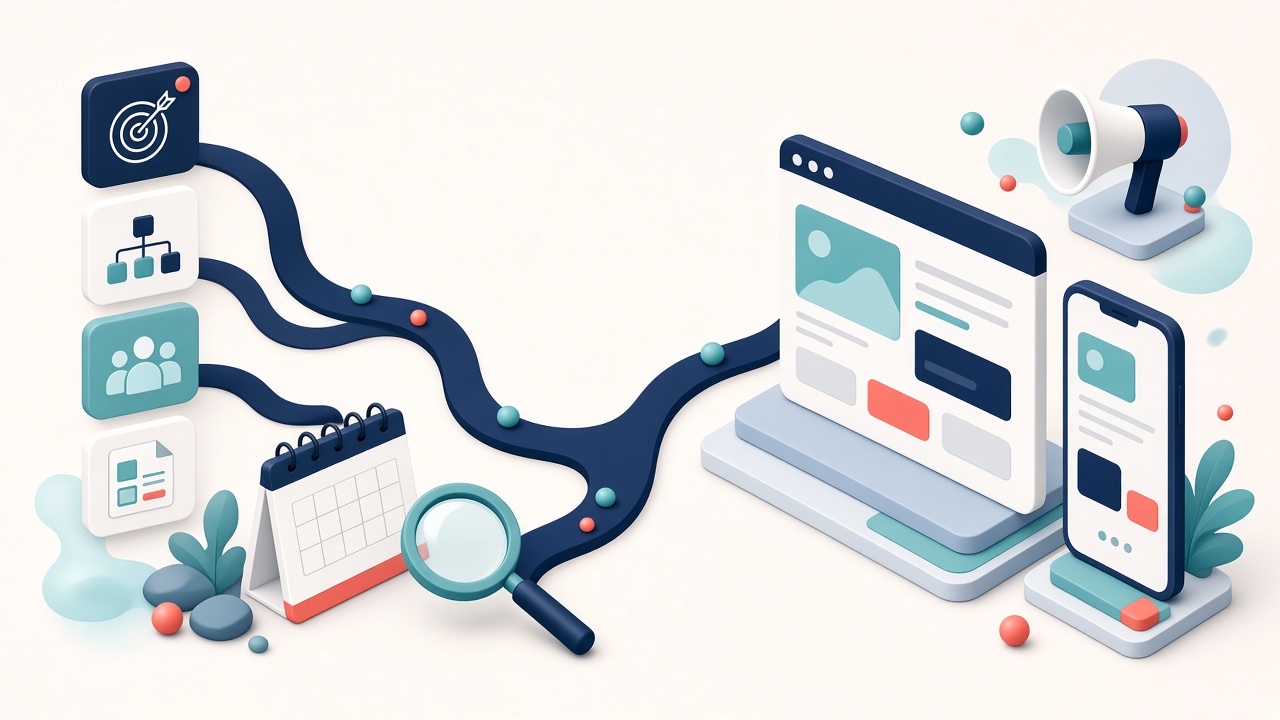
A new website or app can be technically ready while the business is still unprepared to launch it. The interface works, forms send enquiries and everything looks polished. Yet important questions remain: who is this for, how will those people find it, and what should they do once they arrive? If those answers come only after release, marketing starts by revisiting decisions already built into the product.
Starting earlier does not mean buying ads immediately or spending months promoting something that is not available. It means connecting development, content and customer acquisition while changes are still straightforward. Here is a practical way to make that happen.
1. Define your audience and the next step
“All business owners” is rarely a useful audience for an initial campaign. Choose a group whose needs you can describe clearly: for example, owners of small service businesses who need a simpler way to organise enquiries. Write down their problem, how they currently handle it and why they might consider a change.
Then choose one main action for the page. Do you want a demo request, an early-access registration or a purchase? Each needs different supporting information. A product that is not available should not have a button suggesting that people can start using it immediately. Explain what happens after registration and when someone can expect a response.
2. Research questions before fixing the site structure
Talk to potential users and listen to how they describe their problems. Collect questions from sales conversations, phrases people search for and uncertainties that prevent a decision. Keyword research can add useful context, but it should not replace those conversations.
Use that material to outline the website: what the product does, who it serves, how it works, what the offer includes and how to get help. Every important page needs a clear purpose. If buyers need to understand integrations before making a decision, plan that content from the start rather than burying it later in a general FAQ. Marketing then helps shape the information architecture, instead of merely supplying slogans once the design is finished.
3. Make SEO and measurement part of development
Basic SEO is not a final pass to add keywords. Agree on readable URLs, page titles, meta descriptions, internal links and language-version behaviour before release. Check whether search engines can access important content and whether canonical and hreflang tags match the intended addresses. Keep development environments out of search results, then confirm that those restrictions have not accidentally carried over to the public website.
Also define the events that matter: a successfully submitted enquiry, completed registration or booked demonstration. A button click is not the same as a successful form submission. Agree on event names, test them and assign someone to review the results. Implement analytics and marketing tags with appropriate notices and consent where required, and do not send enquiry text or personal details into analytics events.
4. Prepare a landing page and a focused content set
You do not need a large article library to begin. A smaller, coherent package is often more useful: a landing page with a clear offer, an explanation of how the product works and answers to the most important questions. Explain what users receive, what they need to do and any limitations they should understand before signing up.
If screenshots show an application still in development, label them as examples or work in progress. Do not promise features that are not ready or fill empty space with invented testimonials. For pre-launch registrations, collect only what you need and distinguish the requested availability notification from subscriptions to other marketing messages. Good launch content makes uncertainty visible and manageable rather than hiding it behind polished language.
5. Choose channels around intent, not habit
You do not need a presence on every social platform at once. If the audience is actively looking for a solution, search-focused content and a carefully scoped search campaign may be a sensible starting point. If the problem needs explaining first, useful educational content and direct conversations within a relevant community may be a better fit. The choice depends on the audience, offer and time available.
For each channel, state the assumption you want to test. Do visitors understand the offer well enough to request a demonstration? Set a spending limit and decide when to pause the test. Use consistent UTM parameters without personal information to distinguish traffic sources. Review enquiry quality alongside visitor numbers: traffic alone does not demonstrate that you have found potential customers.
6. Test the entire journey before release
Before launching, follow the path from an ad or search result through to the response to an enquiry. Check mobile layouts, loading performance, forms, error messages and submission confirmations. Someone must also own what happens after conversion: who replies, what information they send and how the next step is recorded.
A practical sequence might be to agree on the audience and offer before design is finalised, prepare content and tracking during development, test the complete journey before release, and review data alongside real user questions afterwards. This is not a fixed calendar. It is a reminder that development and marketing need shared checkpoints. If a critical part of the journey fails, fix it before increasing reach and sending more people into the same problem.
A launch starts a conversation
Early marketing planning does not guarantee sales. It gives you a clearer starting point: you know whom you are addressing, what you offer and what meaningful interest looks like. After release, you can improve the message, content or user journey using actual questions instead of guesswork.
Mediatorium connects digital product design and development with digital marketing, including SEO, content, paid campaigns and analytics. If you are preparing a website or app, let’s discuss the launch plan while there is still time to align the product with the way its audience will discover it.